Jotun: Valhalla Edition and its portrayal of Norse Paganism
By staff writer
Disclaimer: I am still new to exploring Norse Paganism and so many of the interpretations going forward are using my existing knowledge. I am not an expert nor an academic and all points should be taken with a pinch of salt. I have also tried to reveal as little of the main story as possibly to avoid spoilers but I will speak about some of the plot going forward.
One of the main topics I wanted to cover when restarting Cape Nerd Collective, was a focus on the portrayals of Norse Paganism within nerd culture. For years, I have been a huge fan of Thor, yet always skeptical of his existence in Marvel. I am wary of using the Gods and folklore in fiction, as the use of these representations could be a genuine appreciation or just a cash grab — the former of which Tolkien believed “The Mouse” company lacked even long before taking over Marvel and Thor, for example. Now, I wanted to revisit a game I had started just before my old laptop died and shelved it for far too long: Jotun: Valhalla Edition.
The storyline
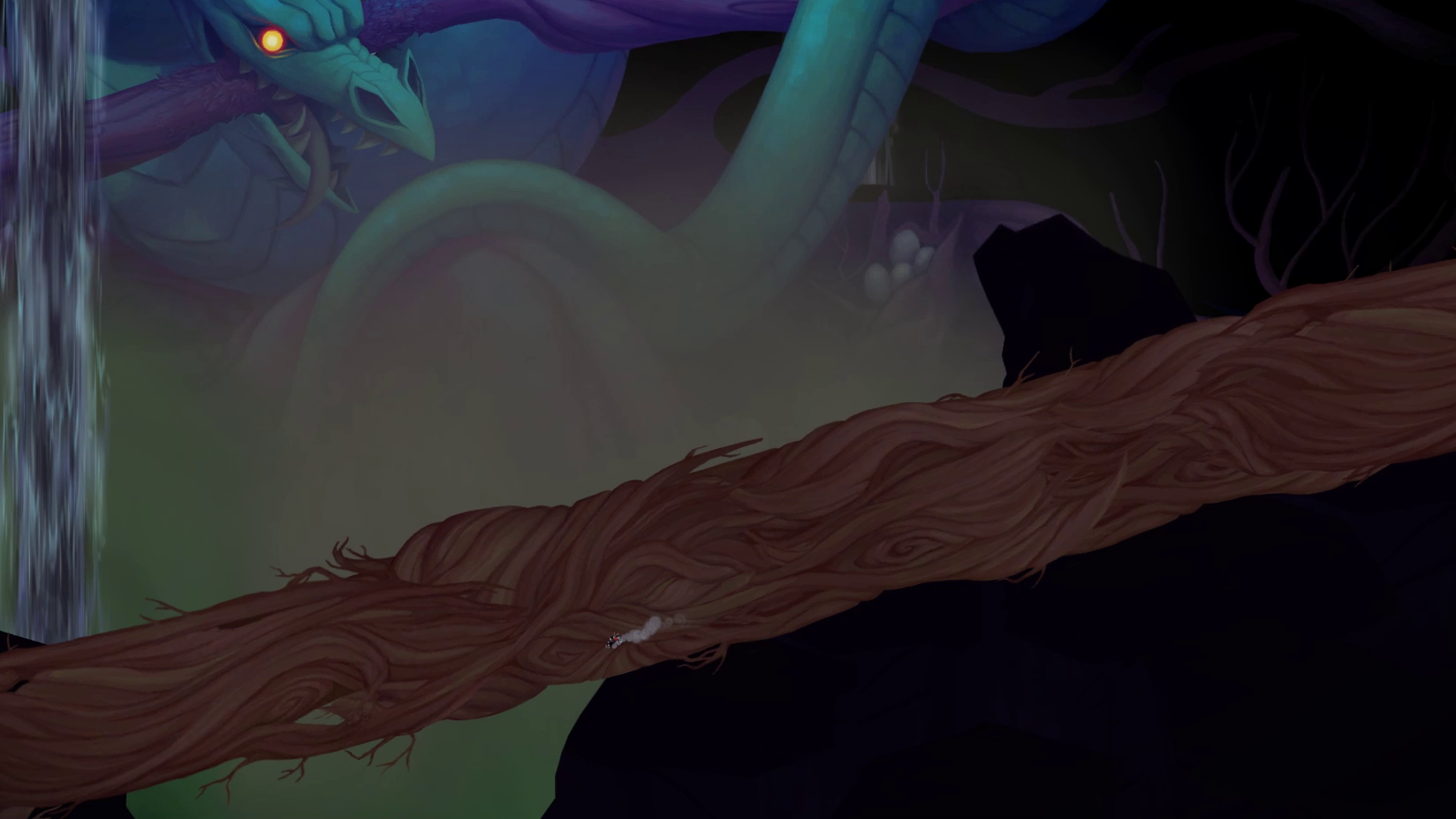
After Thora, the playable character in the game, dies an inglorious death by drowning at sea, she must defeat five Jotun enemies to prove herself to the Gods and enter Valhalla. To face off against these Jotun, more commonly known in pop culture as giants, Thora must collect runes relating to each Jotun on two separate levels before entering a third to face the boss battle.
As the game progresses, the player discovers more about Thora’s life through her dialogue, recounting important events regarding her father and brother. We also find out more about the Norse Pagan Gods as the player explores and uncovers God shrines to get a wide array of powers based on the Gods they are awarded by.
Portrayals of Norse Gods
The strengths of the game, aside from artistic quality, lie in sprinkling a lot of niche and less known details into the game along with setting up a strong base with the well known mythology. Initially, I was disappointed that the game followed the trend of repeating much of the mythology that we often see in pop culture. By this point, everyone knows the names Thor, Odin, and Yggdrasil but I wanted someone to go deeper than these cliche figures. As I wrote the review, I was reminded that there is a content middle-ground in Jotun. The game needed this solid foundation for those new to the stories of Norse Paganism so that it could delve a bit deeper into some of the source material people may not know or readily find in pop culture motifs.
Odin’s depiction in Jotun
This is the big one. While researching, I have heard from many well-versed in this topic that a common misconception when understanding Norse Paganism is to look through the lens of monotheism. However, this is natural, given the influence of Christianity, Judaism, and Islam in the 21st century. I, myself, have struggled to shake off old teachings. One way I do this is by referring to Odin as some one-power figure, a replacement of a monotheistic God.
What Jotun aces is giving Odin the spotlight. If you look at it in a vacuum, Jotun is a game where a warrior doesn’t die in battle despite her desire for a glorious death. She cannot enter the domain belonging to the God associated with war and victory; instead, Odin gives Thora the opportunity to fight and show her prowess to impress Him to enter Valhalla. There is no mention of heaven, no desire for Valhalla by an average Joe as a heaven equivalent (no, Charlie Kirk isn’t in Valhalla and Patel is on drugs). The game draws the line that this is about one’s relation to a specific God. Thora is exploring her personal relationship with Odin, in the same way, in life, we explore our relations to each God, sometimes even the Jotnar. This is an important distinction in a time where Norse Paganism can be incorrectly equated to the Viking Age and Viking TV shows. But, Jotun is a Viking videogame, sure. This premise sets up the combat and conflict needed to drive the narrative forward. But there’re also no other Gods physically present in this domain. Odin is the God in focus but there is always the reminder about him being one entity within the Aesir and the greater nine realms.
Other Gods in Jotun
Outside of Odin, we also have other characters, who I won’t name to keep it as a surprise should you wish to experience it for yourself (which I highly recommend you do). While they don’t make appearances in the game, they exist as God shrines to give Thora special powers to fight enemies. I thought this was a smart decision for the lore as it doesn’t break away from an Odin-central game, but still allows us to explore the Gods of Norse Paganism and learn more about them.
When activating a God shrine, the player gets a nice rundown of the God, what they are associated with, and how that ties into the power bestowed upon Thora. For example, this includes:
The God’s healing is bestowed upon me! Hail Frigg, queen of Asgard, Goddess of childbirth and wisdom!
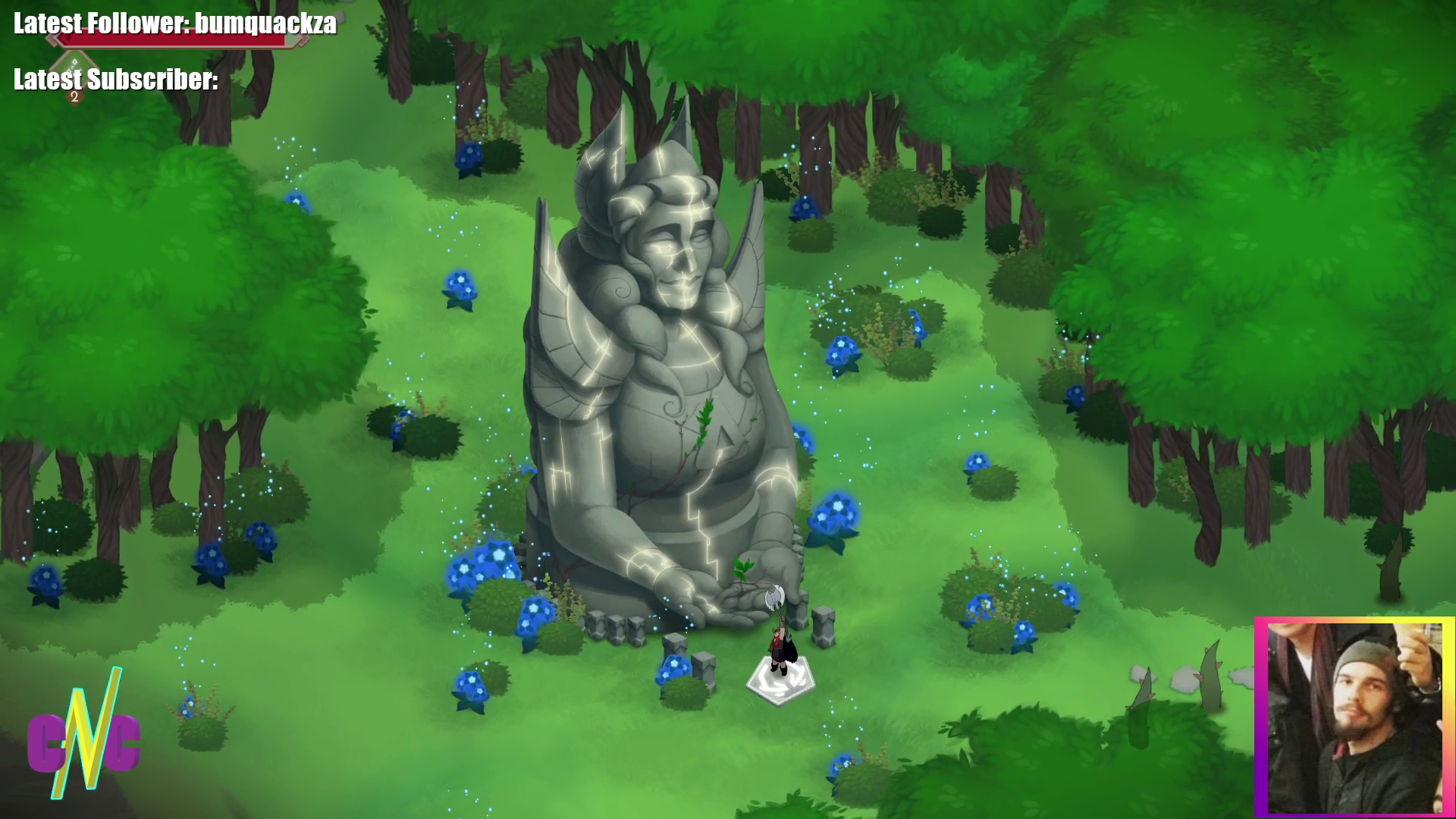
A screenshot of the Jotun: Valhalla Edition game. Thora finds a God shrine to Frigg, giving her the power to heal herself. Image taken during one of our streams on Twitch.
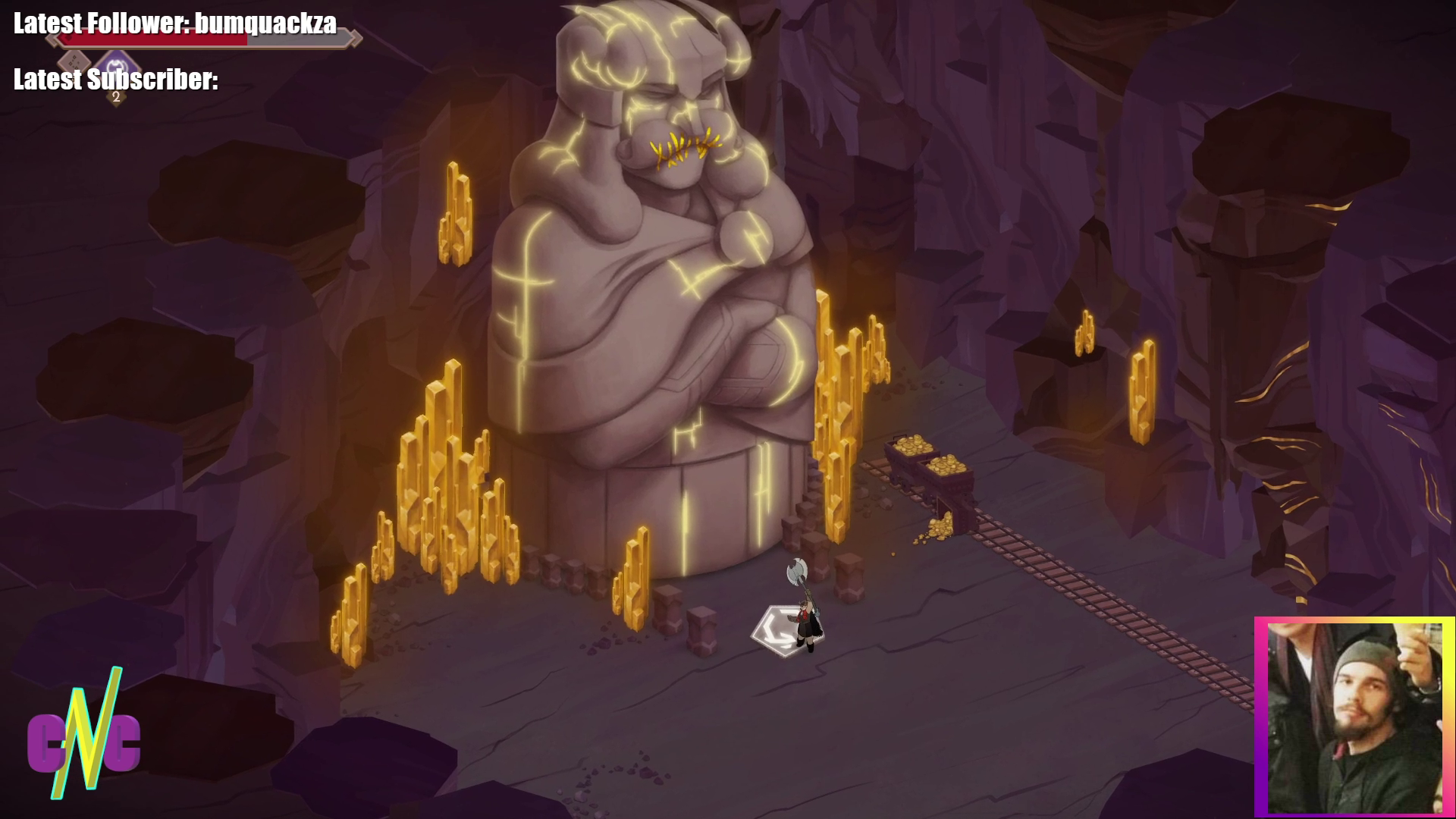
The power of deception is bestowed upon me! Hail Loki, God of mischief and treachery!
As I mentioned earlier, I find that a lot of Norse Pagan media tends to cover the same knowledge or mythology already explored. This makes sense given that you’d want to make your media easily accessible for a larger, more general audience. You don’t want people to need to do hours of homework to get the prior knowledge they need to understand what they’re playing. Naturally, this is the case with Jotun as well since I was a bit disappointed with the devs using the “usual suspects” of Gods like Thor and Loki. Frigg doesn’t usually appear, which was a nice surprise when she was one of the God shrines. But I was pleased, they were all given their share of screentime along with some background. Unfortunately, Idunn doesn’t make an appearance but her apples do, a neat little niche cameo given the importance she has amongst the Gods.
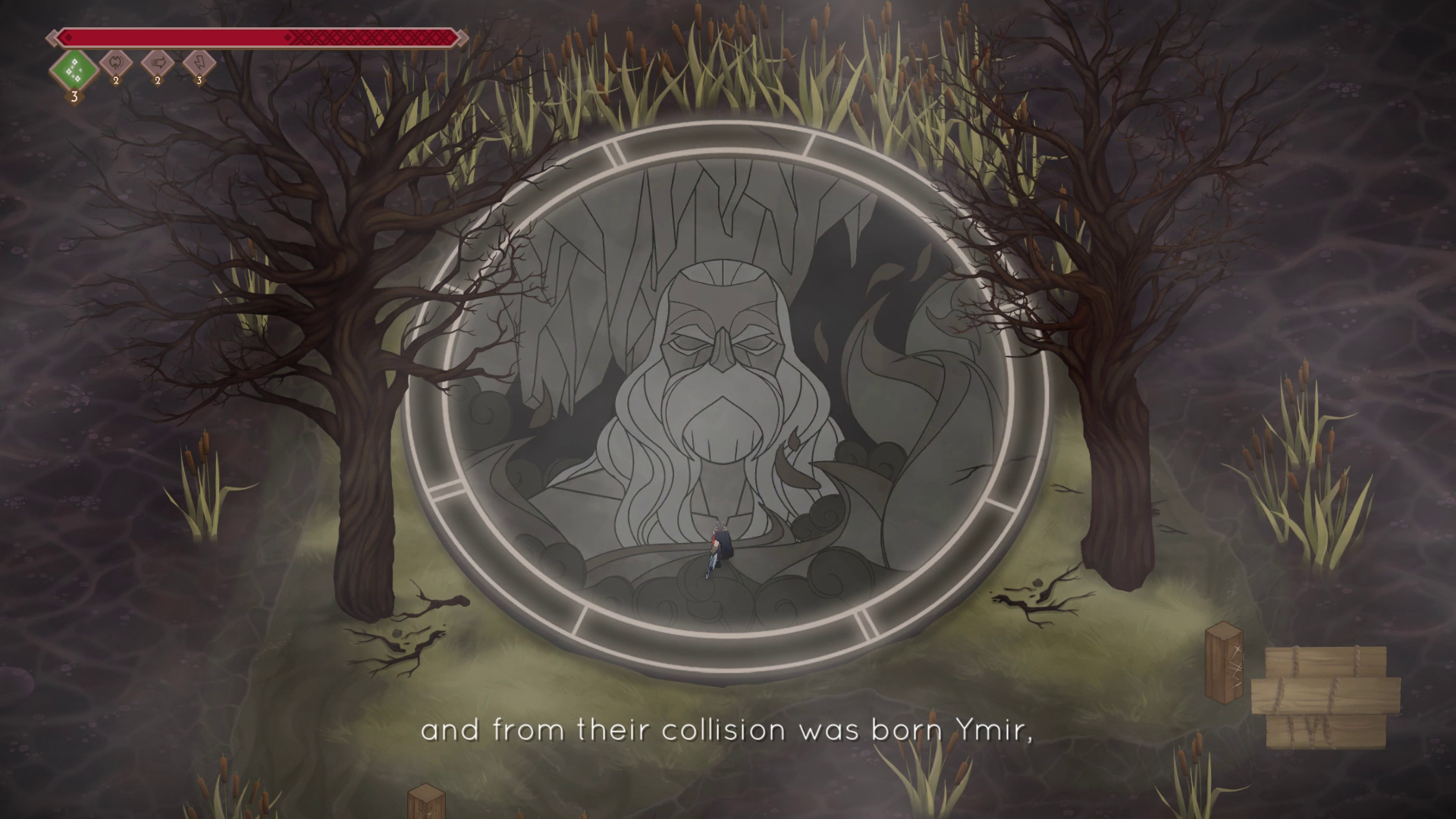
There were other really subtle details about the Gods I liked, such as Loki’s mouth being sewn shut on the God shrine in Brokkr’s Forge. The second detail was Thora’s introduction, where she mentions she was caught by Ran’s net. Ran is the God of the sea’s more dangerous side and this is a common analogy for drowning at sea. It’s these more obscure details of the source material I have been longing to find as I adventure into this literature.
Other details spread throughout in the game
The game is in Icelandic with English subtitles. While the Icelandic sets up Thora’s personality, the value behind it is even deeper and impactful. As many may know, some of the most detailed works, the Prose Edda and Codex Regius, came from Icelanders. While many regions and languages could’ve been chosen, the Icelandic added a beautiful cherry on top, continuing the tradition of the Icelanders teaching us the ways of the Gods.
And, finally, we have a range of significant locations and beings appearing throughout the game. This includes the roots and branches of Yggdrasil as playable levels, along with the critters it houses: Nidhogg the Dragon, Ratatoskr the squirrel, and the unnamed eagle of Yggdrasil. We also venture into Muspelheim and Niflheim, lands of fire and ice giants, for a few levels, the latter of which gives us a surprise visit from Jormungandr. Apologies for the spoiler, but I’m saving you from a potential heart attack.
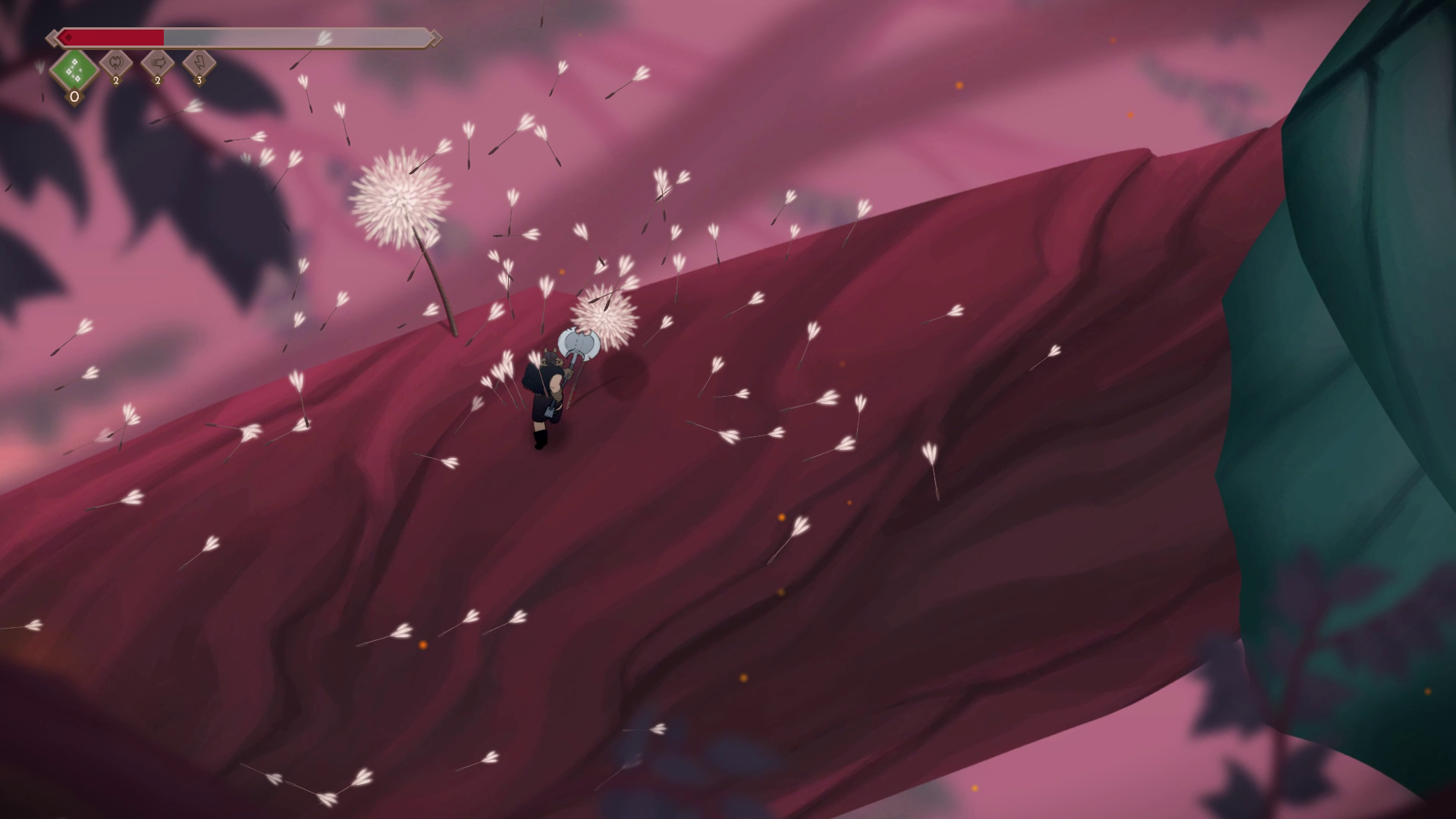
One interesting detail I spotted were the dandelions on Yggdrasil. This was a small feature in the game which I wanted to research more because I personally have a spiritual connection with the plant and my journey into Norse Paganism. It took me a while to find anything through internet research, but with the help of a friend, I found out that there was a connection to Baldur. When he passed, the dwarves were griefstruck, as all creation was, and after Odin gifted them fragments of Baldur’s lost light, the dwarves scattered it on the mountain slopes. Dandelions then sprouted up where these light fragments landed. These thoughtful elements are exactly where Jotun shines and gives us these extra layers of storytelling.
Portrayals of runes and Jotun in Jotun: Valhalla Edition
The runes and their significance in the game
The significance of the runes are given when you encounter the Jotun, which in this game are manifestations of said significance. For example, the first rune, Jera, the rune of harvest and fertility, is embodied by a viney Jotun who can summon smaller vines to fight off Thora.
I found it to be an interesting take as it was a unique method of teaching us the meaning of the runes by not treating them as a one-to-one alphabetic translation. The religion, and thus the runes, are a personal affair, so naturally you may use and interpret them as you see fit. But this interpretation sat well with me as it showcased how they may be used past our current, 21st century understanding of the alphabet and I thoroughly enjoyed experiencing how the art team brought them to life.
As I said before about this being an Odin-centric game, the runes here also add that extra layer of Norse Pagan goodness given that they were revealed to Odin first through self-sacrifice. Even though Thora needs to prove herself to the Gods, Odin remains in the background giving her wisdom through the runes as he does to all his midgard children in life.
How the runes relate to the Jotun
The Jotnar typically tend to be just representations of the harsher aspects of the natural world. The devs, Thunder Lotus games, were really clever with this relationship. Each Jotun is related to the rune collected before the boss battle.
- The wealth and power rune, Fe, is collected to fight the Fe Jotun wielding a coin-like shield.
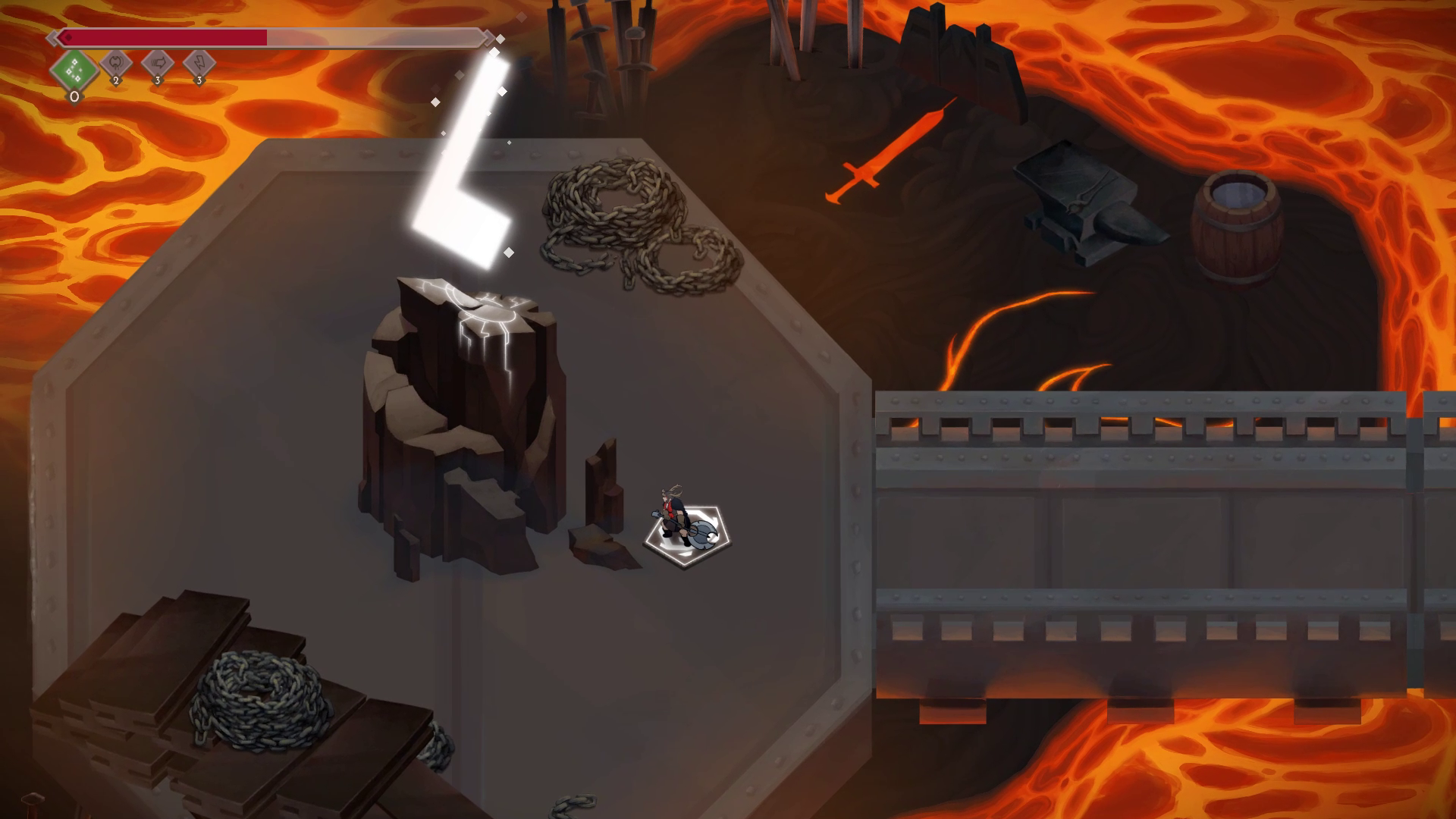
- The rune of hail and chaos, Hagalaz, uses lightning storms.
- The rune of ice, Isa, is represented by a Jotun encased in ice, with small, stationary glaciers acting as obstacles and weapons
Final verdict
Jotun: Valhalla Edition still has to go through the baby steps to teach the player the basics of the mythology behind Norse Paganism and does a decent job by centring the plot around the familiar concept of Valhalla. One of the strongest accomplishments is by separating the story from Norse Paganism as a whole and narrowing it down to Odin’s story and role in the lives of mortals. Valhalla is not portrayed as heaven and rather is separate from the rest of the pantheon, clearly belonging just to Odin. The use of runes helped cement the story as Odin’s and a tool he uses to interact with humanity, a detail that really hit that spiritual bone in my body and gave it additional layers of depth.
The God shrines teach the player about the other Gods and their domains, while the runes are explained not as letters but with what aspects of our lives they are associated with. Additionally, there are a wide range of destinations to explore mentioned in the source material.
Overall, it’s exactly how I feel one would approach gamifying a lesson in Norse Paganism. Covering the basics so everyone can learn regardless of skill level while showing off a bit of the stories and details in the Eddas which are not as well known. I had fun playing the game and even more fun dissecting it. I really appreciate the hard work and attention to detail by the developers. Hats off to you Thunder Lotus Games.
© 2025 Cape Nerd Collective. All rights reserved.
Site designed by Dani Petersen and Luther de Lange